abhilashbera.dev › work › ai-support-assistant
AI Support Assistant
AI/ML · Retrieval · Web
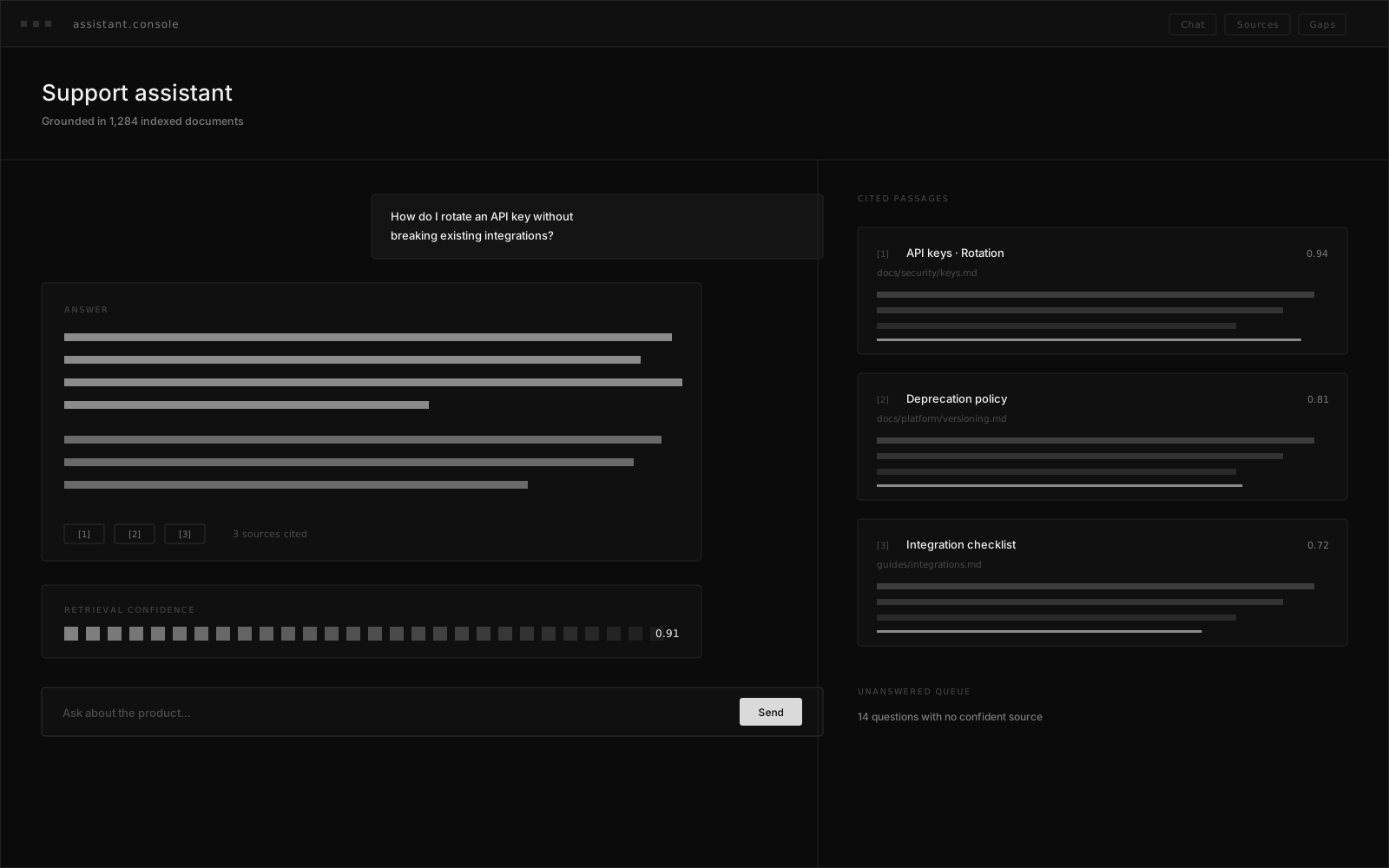
A support assistant grounded in a company's own documentation — with citations, so an answer can be checked rather than trusted.
- Year
- 2025
- Role
- Full Stack · Retrieval
- Status
- In production
- Stack
- Next.js · Python
Problem
The same forty questions arrived every week. Documentation held the answers but nobody could find them, and a naive chatbot returned confident, unsourced text that support could not stand behind.
Solution
Documentation is chunked semantically, embedded and indexed in pgvector. Retrieval combines vector similarity with keyword search so exact product names still match. Answers are generated strictly from retrieved passages, every claim carries a citation, and low-confidence retrievals hand off to a human instead of inventing an answer.
Features
- 01
Hybrid retrieval
Vector similarity blended with full-text search and re-ranked before generation.
- 02
Grounded answers
Responses cite the source passages they were built from, linked inline.
- 03
Confidence handoff
Weak retrieval routes the conversation to a human rather than guessing.
- 04
Feedback loop
Unanswered questions become a ranked queue of documentation gaps.
Technology
Frontend
- Next.js
- TypeScript
- Streaming UI
Service
- Python
- FastAPI
- Re-ranking
Data
- PostgreSQL
- pgvector
- Redis
Infrastructure
- Docker
- AWS
- Evaluation harness
Architecture
01Client
Chat UI
Streaming · Citations
Support Console
Handoff · Review
02Service
Retrieval API
Hybrid search · Rerank
Indexer
Chunk · Embed
03Data
pgvector
Embeddings
PostgreSQL
Documents · Feedback
04External
LLM API
Generation
Doc Sources
Sync · Webhooks
Request flow — left to right
Result
Roughly two thirds of routine questions now resolve without a human, and the gap queue turned documentation maintenance into something driven by evidence instead of guesswork.
- Questions self-resolved
- ~65%
- Answers with citations
- 100%
- First token latency
- <2s